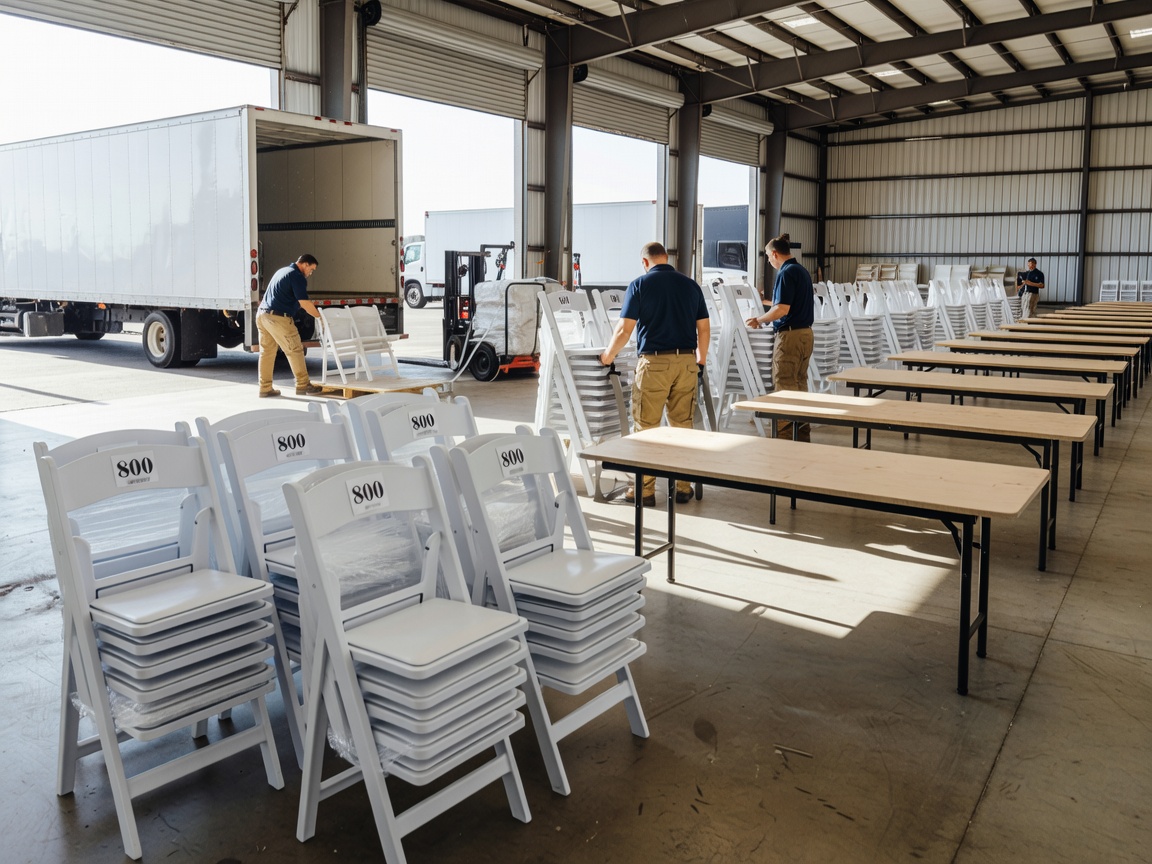
Furniture schedules
Start with a furniture schedule organised by room and function. List seating, tables, counters, bars, lounge pieces and display surfaces separately. Add quantities, dimensions, finish notes and the intended position. A schedule is easier to check than a collection of product images.
Separate the main programme from arrival, catering, speaker, backstage and storage requirements. If furniture moves between sessions, record who moves it, when it moves and where it waits. Do not rely on an informal assumption that the venue team will handle a change.
Measure the venue
Record room dimensions and note columns, doors, thresholds, lifts, stairs, ramps, low ceilings and restricted areas. Measure the route from loading point to final position. A piece that fits inside a room may not fit through the entrance or around a turn.
Mark accessible routes, emergency exits, service paths and technical positions on the layout. Include chairs pulled out from tables and the space needed to approach a counter. Check the plan at full scale where possible.
Delivery access
Confirm the loading area, vehicle restrictions, booking procedure and building contact. Some venues limit delivery hours or require protective equipment. Stairs and lifts affect handling time. Long corridors and shared entrances affect the order in which items should arrive.
Provide clear instructions rather than a general venue address. Include the loading entrance, contact person, access code where relevant and the intended holding area. Keep a current phone contact available on the day.
Setup and collection windows
A setup window should include unloading, movement, assembly where applicable, placement and a final room check. Work backwards from guest arrival and allow time for adjustments. Collection needs its own window after the room is cleared. Confirm whether furniture must be dismantled, cleaned, stacked or protected before handover.
Temporary storage can simplify a multi-room event, but the area must be dry, secure and large enough for safe separation. Do not place furniture in an emergency route or in front of equipment that must remain accessible.
Condition and weather planning
Record the visible condition at the start and report concerns through the agreed contact. Keep packaging, loose parts and cushions together. Protect upholstery and finished surfaces from food, tools, moisture and dragging.
Outdoor events require a weather decision. Consider rain, wind, heat, unstable ground and overnight exposure. Identify an indoor alternative or a way to move furniture under cover. A forecast can change; a contingency plan should not depend on one exact condition.
Planning checklist
- Event date and planning window
- Venue and room types
- Guest count
- Furniture quantities and dimensions
- Layout and circulation requirements
- Access restrictions, stairs and lifts
- Setup and collection windows
- Weather exposure and surface protection
- Temporary storage requirements
- Named venue and rental contacts
Good logistics are specific. Share the schedule early, update it when the venue changes, and keep the final version available to everyone responsible for access, placement and collection.