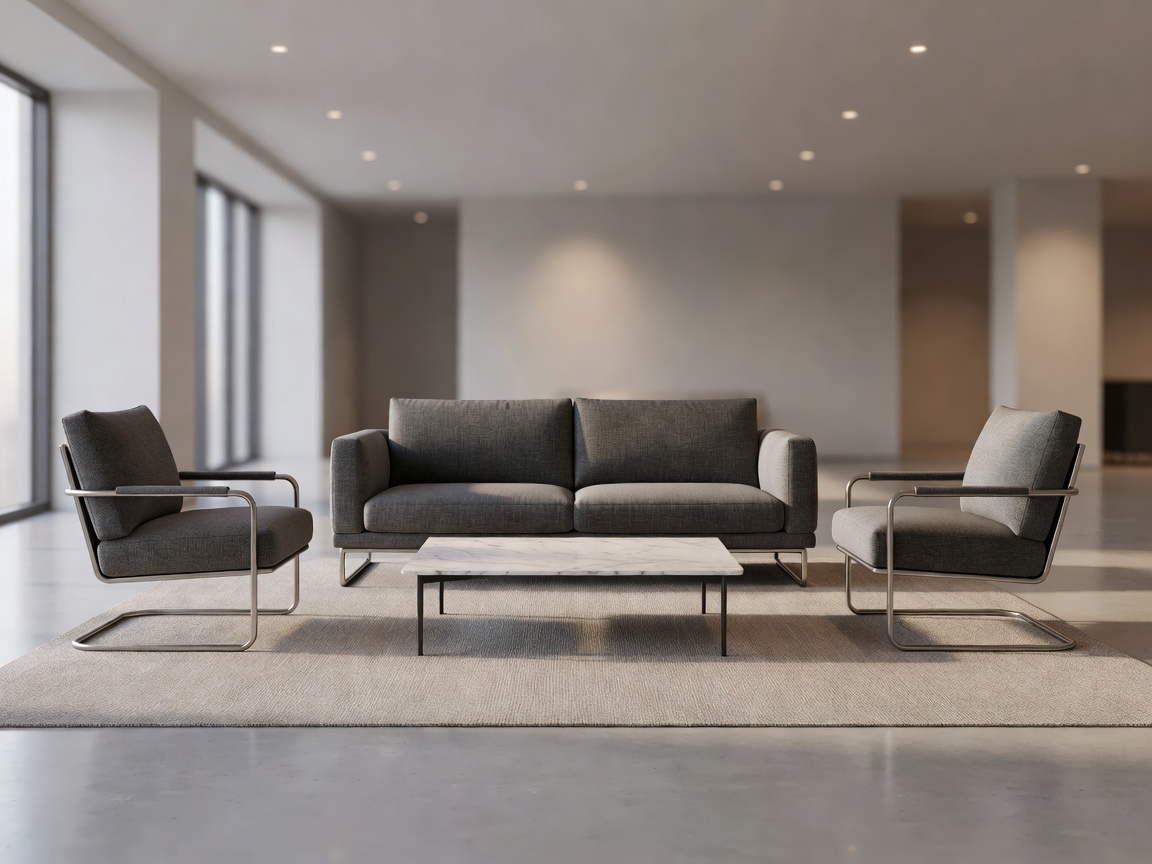
Build a useful cluster
A lounge group normally combines a sofa or armchairs with a coffee table, side table or ottoman. The combination should support the expected conversation pattern. Two chairs facing a table create a compact meeting point. A sofa can anchor a longer conversation. Ottomans add flexible seating but may be less suitable for formal work or extended sessions.
Reception clusters work well near arrivals, bars and hospitality areas. Exhibition lounges can give visitors a place to pause without blocking the principal circulation route. Corporate networking areas benefit from a mixture of seated and standing positions. Keep the edge of each group legible so people can enter without moving furniture.
Where lounge furniture works
Soft seating is useful for receptions, launches, hospitality environments, exhibition rest areas and informal meetings. It gives a room a more domestic scale and can separate a large floor into smaller zones. It is less practical when every guest needs a writing surface, fixed sightline or fast seat turnover. In those situations, conventional conference or banquet seating may be more efficient.
Use furniture combinations consistently. A single chair style can create order. A controlled mix can distinguish registration, networking and hosted areas. Avoid combining pieces that have conflicting seat heights, depths or visual weight.
Spacing and traffic flow
Start with the usable floor area, not the catalogue image. Draw the sofa, chairs and tables at their actual dimensions. Add room for people to sit, stand and pass. Keep entrances, emergency routes, service paths and accessible approaches clear. A lounge cluster should not become a barrier between a doorway and the main event space.
Coffee tables need enough clearance for knees and movement. Side tables can reduce reaching across other guests. Where drinks are expected, use stable surfaces and consider cleaning access. Outdoor arrangements need a firm surface, protection from weather and a plan for movement if conditions change.
Materials and condition
Fabric, leather-look, timber and coated finishes each have different handling and cleaning needs. Confirm whether a piece is suitable for food service, outdoor use or high-contact areas. Upholstery should be protected during transport and held away from moisture. Do not place furniture directly on a wet surface.
Condition expectations should be clear before the event. Keep food, drinks, tools and packaging away from upholstery. At collection, return cushions and loose components with their original furniture group. Note marks or damage through the agreed process rather than attempting unapproved repairs.
Planning questions
- How many people should each cluster serve?
- Will guests sit briefly or for a long session?
- Is a table needed for drinks, documents or devices?
- What route will delivery and collection follow?
- Where can furniture be held during setup?
- Will weather or surface conditions affect use?
Soft seating works best when the furniture plan respects conversation, access and maintenance. Share the room dimensions and desired functions before selecting the final combination.